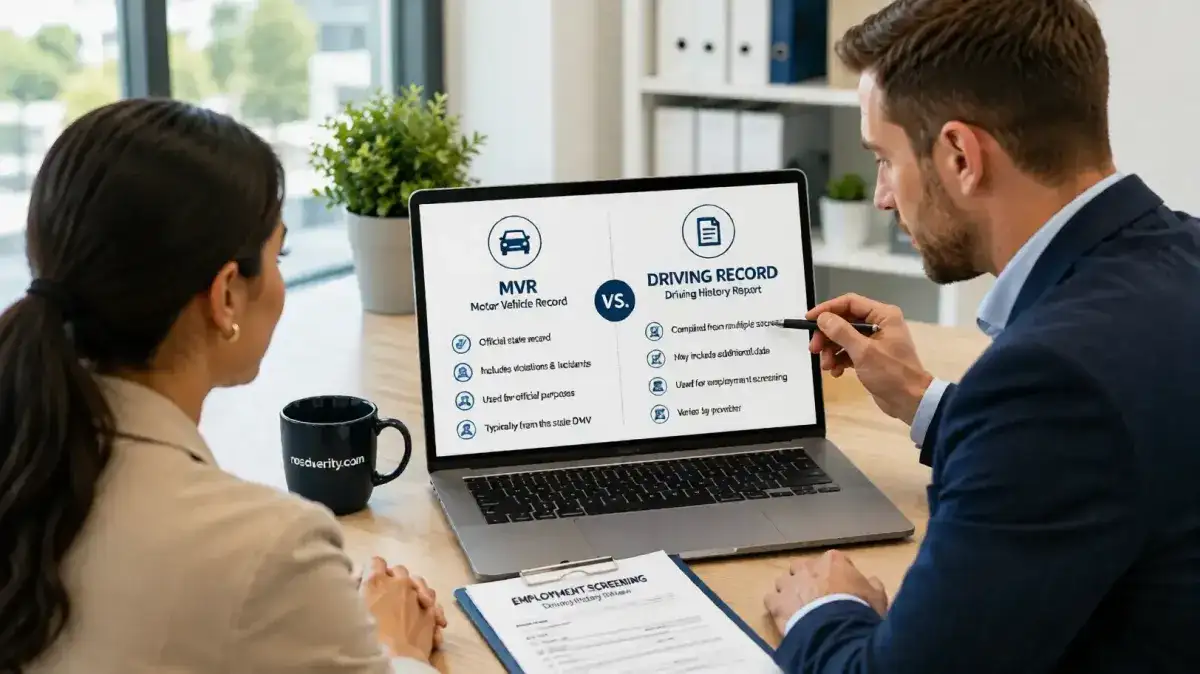
"MVR" (Motor Vehicle Record) and "driving record" refer to the same document — MVR is just the term that shows up more often once an employer, insurer, or background-check company is involved. If a job application mentioned an MVR check, this is what actually happens next, and what rights you have along the way. Most guides to this topic are written for HR departments. This one's written for you.
What Actually Happens When an Employer Checks Your Driving Record
Federal law — specifically the Fair Credit Reporting Act (FCRA) — lays out a required sequence when an employer uses a third-party background-check company to pull your MVR as part of a hiring decision:
- The employer must tell you, in a standalone written disclosure, that a background check involving your driving record will be conducted.
- You must give written authorization before they can proceed.
- The background-check company pulls the record.
- If something in it might cost you the job, the employer must give you a "pre-adverse action" notice — including a copy of the actual report — before making a final decision.
- You get a window (commonly around five business days, per FTC guidance) to review it and flag anything inaccurate.
- Only after that can the employer finalize the decision — and if it goes against you, you're entitled to a second notice with your rights, including how to get a free copy of the report and dispute it further.
Your Right to Know Before It Happens
You can't legally be background-checked as a surprise. The disclosure has to be a standalone document — not buried in a job application or an employee handbook — and it has to clearly state that a driving record or other consumer report will be obtained. If you signed something during onboarding without a document dedicated specifically to this disclosure, that's worth knowing, since it may not meet the standard.
If Something on Your Record Could Cost You the Job
This is the part most applicants don't know exists. Before an employer can reject you (or fire you) because of something on your driving record, they're required to pause and give you a real chance to respond — including an actual copy of the report, not just a summary. This exists specifically to catch mistaken identity, outdated information, or an error that hasn't been corrected yet. If you ever get this notice, it's worth acting on quickly: request a correction from the DMV if the issue traces back to them, or from the court if it's a case-level error. See How to Correct Errors on Your DMV Driving Record for that process.
How Far Back Can an Employer Actually See?
This depends on three separate things layered on top of each other, which is why the honest answer is "it depends":
- FCRA's 7-year rule limits how far back a background-check company can report certain adverse, non-conviction information — but this specifically doesn't apply to criminal convictions, and doesn't apply at all to positions paying $75,000 or more per year.
- FCRA's limits apply to third-party background-check companies — if an employer requests your driving record directly from the state instead of through a consumer reporting agency, this particular federal limit doesn't govern that request the same way.
- Your state's own retention rules often matter more in practice than the FCRA rule, since many states only keep or report certain violations for three to seven years anyway — sometimes shorter than FCRA's ceiling, sometimes longer for serious violations.
See How Far Back Does a Driving Record Go? State Lookback Periods for the specific timeframes by state.
Two Different Laws, Working Together
Employer access to your driving record is governed by two separate federal laws at once, not just one. The DPPA controls whether the state is allowed to release your record to the employer in the first place; FCRA controls what the employer has to do once they have it. Meeting one doesn't automatically mean the other is satisfied. See Who Can Access Your Driving Record? DPPA & Privacy Rules for the DPPA side of this.
Commercial Driving Jobs Are Different
If the role requires a commercial driver's license, additional federal rules apply on top of FCRA. Employers are generally required to check your driving record before hiring you and again every year after — and specifically in every state where you held a CDL within the past three years, not just your current state. This is a federal safety requirement, not just a hiring formality; see certified vs. uncertified driving records for what this means for which version of your record actually gets used.
How to Prepare Before a Background Check
- Request your own record first. Seeing exactly what's on file removes the guesswork — see how to get your driving record.
- Fix errors before they show up in someone else's report. Correcting a mistake after you've already been flagged is slower and more stressful than catching it in advance.
- Know your state's actual lookback period. A violation you assume is "long gone" may still be reportable, and vice versa.
- Keep documentation for anything resolved in your favor — a dismissal, a completed diversion program — in case a report doesn't reflect the final outcome.
Frequently Asked Questions
Can an employer check my driving record without telling me?
Not legally, if they're using a background-check company and it's covered by FCRA — you must receive disclosure and give authorization first.
What if the report has an error?
You have the right to dispute it, and if you're in the pre-adverse action window, that's exactly the moment to raise it — before a final decision is made, not after.
Does a dismissed ticket still show up on an MVR an employer sees?
It may still appear as an entry with "dismissed" as the outcome, rather than being erased. Whether that affects a hiring decision depends on the employer's own policy, not on FCRA itself.
Is there a difference between what I can request about myself and what an employer can request about me?
Often, yes. You can typically request your own complete record directly from the state; an employer's access is filtered through DPPA's permitted-use rules and, if a third party is involved, FCRA's process on top of that.
Sources & Methodology
Compiled from FCRA guidance and federal motor carrier regulations:
- Federal Trade Commission — Using Consumer Reports: What Employers Need to Know
- eCFR — 49 CFR Part 391, Qualifications of Drivers
FCRA's core disclosure, authorization, and adverse-action requirements are federal and apply nationwide, but several states add stricter rules on top. Reporting limits, lookback periods, and salary thresholds referenced here reflect federal law as currently in effect. This guide is general education, not a substitute for reviewing your specific paperwork with a professional if you believe your rights were violated.
This article is for general educational purposes only and isn't legal advice. For guidance on your specific situation, consult a licensed attorney.
Next step: Wondering what actually counts as a problem on a record versus what's considered normal? See What Counts as a "Clean" Driving Record?


Leave a Reply