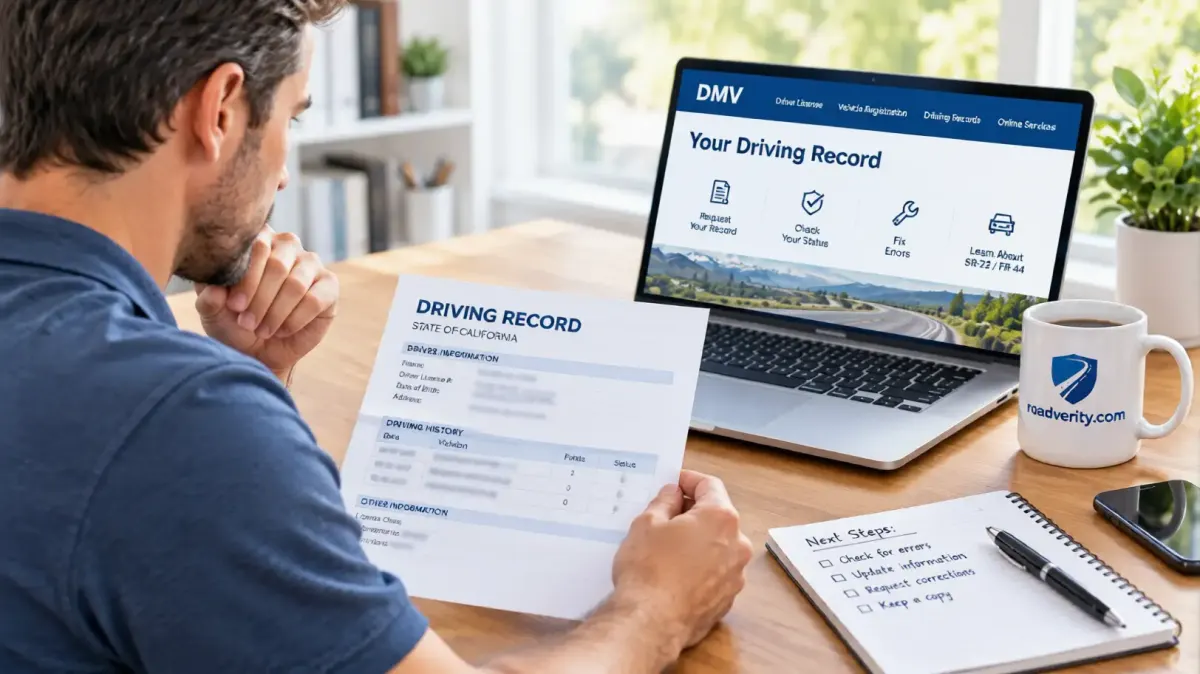
A driving record is the single document that follows you through almost every DMV interaction that matters — insurance underwriting, a job that requires driving, a court proceeding, a move to a new state. It's also one of the most misunderstood documents most people will ever request, because "your driving record" isn't one fixed thing: what's on it, how long it stays there, who can see it, and even what to call it changes depending on who's asking and why. This hub is the complete, state-aware guide to all of it.
Getting Your Own Record
Start here if you need a copy of your record for yourself, an application, or a legal requirement:
- How to Get Your Driving Record: Step-by-Step Guide for All 50 States covers the three general request paths — online, by mail, and in person — and where each state's process differs.
- Certified vs. Uncertified Driving Records explains the distinction that trips up the most people: an online printout is rarely what a court, employer, or insurer means when they ask for your "official" record.
- Driving Record Fees & Processing Times by State (2026) is our full state-by-state fee table, since a handful of states charge meaningfully more than the $2–10 most states settle around.
- Can You Get a Free Driving Record? State-by-State Rules covers the states and situations where a fee-free option genuinely exists.
- How to Request an Out-of-State Driving Record is for anyone who's moved, or who needs a record from a state they no longer live in.
- Who Can Access Your Driving Record? DPPA & Privacy Rules walks through the federal Driver's Privacy Protection Act's permitted-use categories — your record is far more restricted than most people assume, but not private in every direction.
Understanding What's Actually On It
Once you have your record in hand, this is where to go to actually make sense of it:
- How to Read a Driving Record: Codes, Sections & Examples is the plain-language walkthrough of the layout most state records share.
- Driving Record Violation & Disposition Codes Explained goes deeper on how a specific violation and its outcome (convicted, dismissed, reduced) get represented.
- MVR vs. Driving Record: What Employers Need to Know clears up a genuinely common point of confusion — an "MVR" isn't a different document, it's the same record pulled through an insurance or employment channel, often with its own added scoring layer.
- What Counts as a "Clean" Driving Record? How Insurers Define It explains why insurers' definition of "clean" and the DMV's own point thresholds are frequently two different yardsticks.
- How Far Back Does a Driving Record Go? State Lookback Periods covers how long a given violation actually stays visible — which varies not just by state but by how severe the violation was.
Corrections, Special Cases & How Others Use Your Record
The last group covers what to do when something's wrong, sensitive, or being used by someone other than you:
- How to Correct Errors on Your DMV Driving Record — and the important caveat that the DMV can only fix its own errors; a mistake that originated in court has to be corrected by the court, not the DMV.
- Identity Theft on Your DMV Record: How to Dispute Fraudulent Entries covers what to do when a violation on your record isn't actually yours.
- Can You Expunge or Seal a Driving Record? State-by-State Rules is honest about how limited this option actually is in most states.
- How Employers Use Driving Records for Background Checks explains the FCRA rules that apply once a record is pulled through a third-party background-check company rather than requested directly — including a 7-year non-conviction reporting limit that has its own exceptions, and the growing practice of continuous, real-time monitoring rather than a one-time pull.
- CDL Driving Records: How They Differ From Standard Records covers commercial driving records specifically — including the detail that surprises the most CDL holders: a disqualifying violation in your own personal vehicle, off duty, can still affect your commercial record.
Sources & Methodology
Each article in this hub is sourced individually — primarily from state DMV sites, the federal Driver's Privacy Protection Act and its permitted-use categories, and the Fair Credit Reporting Act where a third-party background check is involved. See each guide's own "Sources & Methodology" section for its specific citations. Because retention periods, fees, and access rules are all set at the state level and do change, always confirm the current specifics for your state directly with its DMV.
Next Steps
- License Suspension & Reinstatement: The Complete Guide — the natural next hub if a violation on your record has led to points or a suspension
- How Driver's License Point Systems Work
- DMV Glossary: 100+ Driving Record & License Terms Explained



Leave a Reply