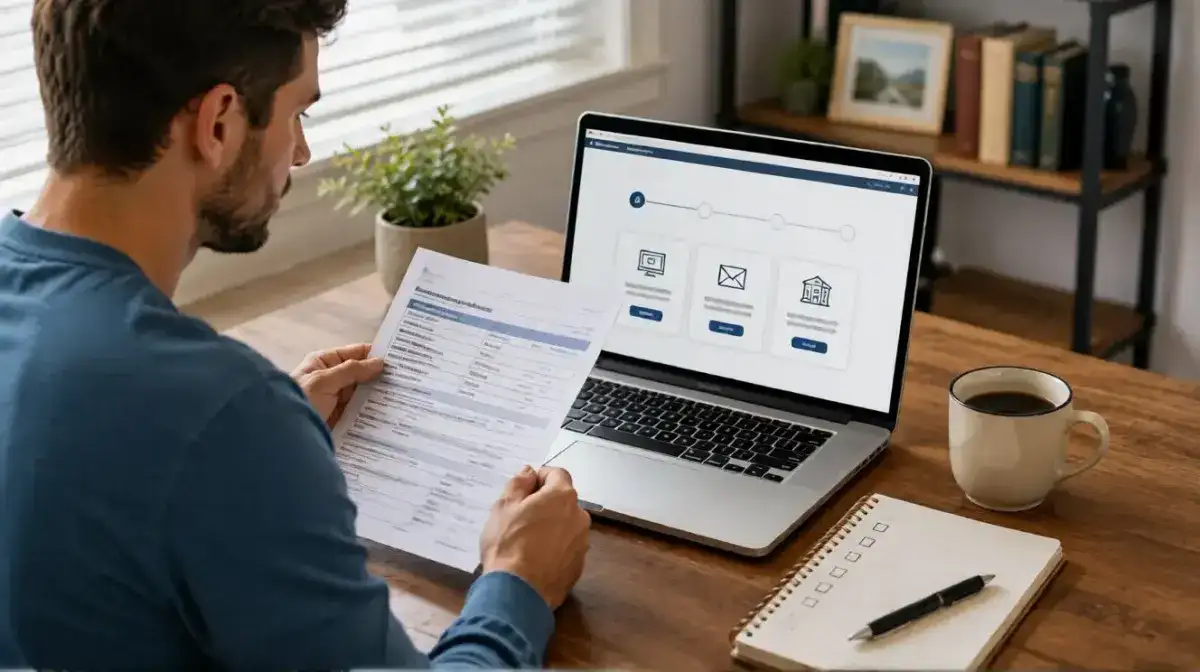
Your driving record — sometimes called a Motor Vehicle Record, or MVR — is the official history your state's motor vehicle agency keeps on file: your license status, violations, accidents, and any points assessed against you. You might need a copy to apply for a job, shop for insurance, check for a reporting error, or simply confirm what's on file before it surprises you later. Every state lets you request your own record, though the exact process, available record types, and turnaround time vary by state. Here's the general process, plus exactly where states differ.
What's Actually On a Driving Record?
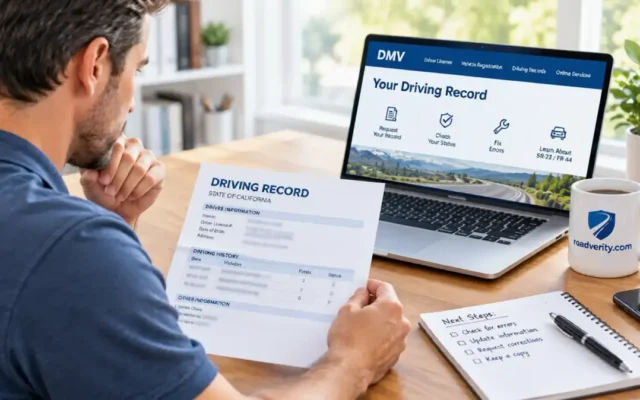
A standard driving record typically includes your license status and class, moving violations and convictions, at-fault and reportable accidents, suspensions or revocations, and any points assessed under your state's point system. It's a different document from a vehicle record, which tracks a car's registration and title history rather than a person's driving history. It's also worth knowing that a driving record isn't the same as a real-time status check — if you need to know whether you can legally drive right now, your state's license eligibility or status-check tool is the faster answer. Access to your record — and to anyone else's — is governed by the federal Driver's Privacy Protection Act (DPPA) , which restricts disclosure of your personal motor-vehicle information to a specific set of permitted purposes — including government, court, insurance, and certain employment uses, as well as requests made with your consent — rather than allowing open access to anyone who asks.
The 3 Ways to Request Your Driving Record
States offer different combinations of these methods — some offer all three, others limit requests to just one or two. Texas, for example, doesn't offer in-person driving-record service at its DPS offices, even though it offers both online and mail. Where online ordering is available, it's generally fastest; mail takes the longest.
1. Online (Fastest)
- Go to your state's official DMV, BMV, or DPS website. If you're not sure of the exact page, search "[Your State] DMV driving record request."
- Create an account or use the state's guest-request tool, if no account is required.
- Enter your driver's license number, your full legal name exactly as it appears on your license, and your date of birth.
- Pay the fee by credit or debit card.
- If your state provides the record electronically, download or print it right away — the exact format and delivery method depends on your state's system.
Note: some states' online systems issue an uncertified copy only, meant for viewing and printing. If you need a certified copy for a job or legal purpose, check whether your state requires the mail or in-person option for that. Stick to your state's official .gov site — third-party "record lookup" sites may charge extra for information the state provides directly, and they aren't the source an employer, court, or agency will treat as official.
2. By Mail
- Download the official record-request form from your state DMV's website.
- Fill it out completely — name, license number, date of birth, and reason for the request if asked.
- Attach a check or money order for the fee. Most states don't accept cash by mail, and a growing number no longer accept card payment through the mail either.
- Mail it to the address printed on the form.
- Wait — mail requests typically take one to three weeks, depending on the state.
3. In Person
- Find a DMV, BMV, or DPS office that handles driving-record requests — not every branch does.
- Bring a valid, unexpired photo ID.
- Complete a short request form on-site, if your state requires one.
- Pay the fee — cash, card, or check, depending on the office.
- If your state offers in-person requests, you may receive the record the same visit — but some offices process or mail it afterward instead. Confirm before you go.
What You'll Need Before You Start
- Full legal name, exactly as it appears on your license
- Driver's license or state ID number
- Date of birth
- Current mailing address (for mail requests)
- Social Security number, or the last four digits (required by some states)
- A valid photo ID (for in-person requests)
- An accepted payment method for your state — card, check, or money order
A mismatch — a maiden name, an old address, a mistyped license number — can delay your request or cause it to be rejected. Double-check every field against your physical license before submitting.
Certified vs. Uncertified: Which One Do You Need?
Most states offer two versions of the same record. An uncertified copy is fine for your own review — checking for errors, confirming your point total, or general peace of mind. A certified copy carries an official seal or statement verifying it came directly from the state, and it's often required for court, licensing, and certain government purposes. Employers and insurers don't automatically need a certified copy just because they're employers or insurers — the right version depends on the specific purpose and requester. If you're not sure which one you need, ask whoever requested it from you — ordering the wrong type is one of the most common, and most avoidable, delays. We cover the full difference, state by state, in Certified vs. Uncertified Driving Records: What's the Difference?
How Much Does It Cost, and How Long Does It Take?
Fees are set independently by each state and depend on the record type, how far back it reaches, and whether it's certified — some states charge just a few dollars for a basic record, while certified or complete versions can cost more. Processing time tracks the method: online is generally fastest where it's available, mail generally takes one to three weeks, and in-person, where offered, is often same-day. A few examples, current as of publication:
| State | Online Fee | Mail / In-Person Fee | Typical Turnaround |
|---|---|---|---|
| California | $2.00 (electronic request) | $5.00 (by mail) | Online: instant · Mail: varies |
| Texas | $4–$20, by record type (see below) | Same fee, plus mailing time | Online: instant · Mail: 15–21 business days |
| Florida | $8–$10, by record type | $10 for a certified copy, any type | Online: instant · Mail: about 1–2 weeks |
Texas offers several distinct record types, from a basic status record ($4) up to a certified complete driving history ($20) — which one you need depends on who's asking for it. These three states are shown as examples, not the full picture. Every state sets its own fees and rules for which record types are available online versus by mail. For the complete 50-state breakdown, see Driving Record Fees & Processing Times by State .
Common Reasons People Request Their Own Driving Record
- Job applications, especially for driving-related roles — delivery, rideshare, commercial driving
- Auto insurance shopping or renewal
- Checking for a reporting error before it affects your insurance or a background check
- Meeting a court, probation, or license-reinstatement requirement
- Confirming license status after a violation, suspension, or DUI-related action
- Moving to a new state and needing your record on hand for the transfer
Found an Error? Here's What to Do
Mistakes happen — a violation logged against the wrong driver, a citation that was actually dismissed, an outdated address. Most states have a dedicated correction-request form separate from the standard record request (California's, for example, is the DL 207). You'll generally need to contact the agency or court that originally reported the error, since the DMV usually can't unilaterally change a record that originated from a court or law-enforcement action. We walk through the full correction process, state by state, in How to Correct Errors on Your DMV Driving Record .
Frequently Asked Questions
Is my driving record public information?
No. Driving records are protected under the federal Driver's Privacy Protection Act (DPPA), which limits access to a specific list of permitted purposes rather than allowing anyone to request your record. See Who Can Access Your Driving Record? DPPA & Privacy Rules for the full breakdown.
How far back does a driving record show violations?
There's no single nationwide answer — it depends on the state, the specific record type requested, and the type of violation. A violation can stop appearing on one record product while still affecting insurance, employment screening, or licensing decisions through a different process. See our state-by-state lookback period guide for exact timeframes.
Can someone else request my driving record?
Only if they fall under one of the DPPA's permitted categories — which includes court and government use, insurance claims and underwriting, certain employer purposes, and requests made with your consent. Consent is one route, not the only one.
Will requesting my own record affect my insurance rate or add anything to my file?
No — requesting your own record is simply a lookup, and it doesn't add anything to your driving history. That said, insurers may separately review your driving record through their own permitted process when you apply or renew, regardless of whether you've requested a copy yourself.
What's the difference between a "driving record" and an "MVR"?
"MVR" (Motor Vehicle Record) and "driving record" are generally used interchangeably to mean the same kind of document. That said, states use different official names and offer different record products, so the specific document an employer, insurer, or court asks for isn't necessarily identical from state to state.
Sources & Methodology
This guide explains the general request process using several state agencies as examples, plus the federal privacy law governing access to driving records:
- California DMV — Records Requests
- Texas Department of Public Safety — Driver License Division
- Florida Department of Highway Safety and Motor Vehicles — Driving Records
- Virginia DMV — Record Request
- DC DMV — Driver Records
- NHTSA — National Driver Register
- American Association of Motor Vehicle Administrators (AAMVA)
- 18 U.S.C. § 2721 — Driver's Privacy Protection Act, Permissible Uses
Record names, request channels, fees, and eligibility rules vary by state and change periodically. This guide reflects information current as of publication — always confirm the specific requirements on your own state's official DMV, BMV, or DPS website, or with whoever is requesting the record, before submitting.
This article is for general educational purposes only and isn't legal advice. For guidance on your specific situation, contact your state's motor vehicle agency directly or consult a licensed attorney.
Next step: Once you know how to request your record, the next question is usually which version to ask for. See Certified vs. Uncertified Driving Records: What's the Difference? to make sure you order the right one the first time.

Leave a Reply