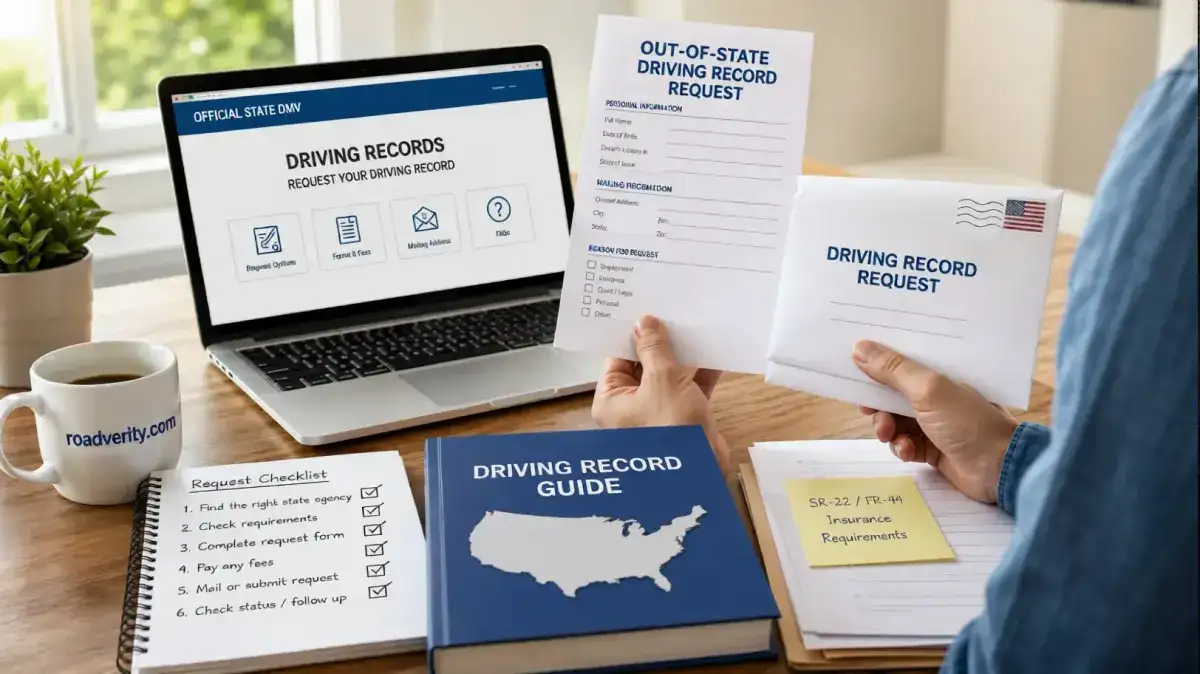
Moved states and need a record from where you used to live? Your old state still has it — a driving record doesn't disappear just because you moved — but requesting it isn't always as simple as it was when you lived there. Here's why, and exactly what to do instead.
Does Your Old State Still Have Your Record?
Yes. Your driving record stays with the state that issued it for that state's standard retention period, regardless of where you live now. Moving doesn't clear it, and it doesn't transfer to your new state as a physical file — your new state has its own separate record that starts when you're licensed there.
Why Online Often Doesn't Work Anymore
Many states' online record systems are built for current residents and may ask for information tied to your active license or current address in that state. Nevada is a clear, documented example: its own DMV states that your driving history won't be available through its online system if you've since been licensed in another state — you'd need to contact the Records Section directly instead. This isn't universal, but it's common enough that mail or a direct phone/written request to the former state's records office is often the more reliable path once you've moved away.
Step-by-Step: Requesting a Record From a State You No Longer Live In
- Try the online option first — some states don't restrict it by residency, and it's worth two minutes to check before assuming you need to mail a request.
- If online doesn't work, go to that state's official DMV, BMV, or DPS website and look for a mail-in record request form.
- Fill it out with your former license number if you still have it (this is usually more reliable than your name and date of birth alone, especially if the state has a common name to search).
- Include your current mailing address — not your old one — so the record actually reaches you.
- Pay by check or money order if that's what the form requires; many state mail systems don't accept out-of-state personal checks differently, but confirm on the form.
- Expect it to take longer than a same-state request — often two to four weeks, sometimes more if the state has to verify your identity manually since you're no longer in their system as a current resident.
What You'll Need
- Your former driver's license number, if you have it (check an old renewal notice, insurance document, or your current state's license application copy)
- Full legal name as it appeared on that state's license
- Date of birth
- Your current mailing address
- A valid photo ID (your current state's license is fine)
- Payment method accepted by that specific state
Does Your New State Already Have This Information?
Partly. When you apply for a license in a new state, that state checks the National Driver Register (NDR), a federal system that flags whether you've had a license revoked, suspended, canceled, or denied in another state, or been convicted of certain serious offenses. It's a pointer system — it tells your new state that something happened and where, not your full violation history. Your new state may then contact the previous state directly for details.
Separately, most states belong to the Driver License Compact (DLC), an agreement to report certain out-of-state convictions back to your home state's driving record. A handful of states — Georgia, Massachusetts, Michigan, Tennessee, and Wisconsin among them — have historically not been DLC members, which can affect whether a violation in one state shows up on your record in another. None of this replaces requesting the actual record yourself if you need a copy in hand.
A State-Specific Wrinkle Worth Knowing
Some states offer a specific document for exactly this situation. Colorado, for example, provides a "Letter of Clearance" — confirming whether or not you have a Colorado driving record — for people who need to prove their history (or lack of one) in Colorado to a different state's DMV. If your situation involves proving something to a new state rather than just reviewing your old record yourself, check whether your former state offers something similar before assuming a standard record request is what you need.
Frequently Asked Questions
Do I need my old state's driving record to get a license in my new state?
Not always — many states can verify what they need through the NDR and direct state-to-state contact rather than requiring you to hand over a physical copy. Check with your new state's DMV directly, since this varies.
What if I don't remember my old license number?
You can still request the record with your full legal name and date of birth; it just may take the agency longer to locate it, and a name that's common in that state can slow things down further.
Can I request an out-of-state record online through a third-party site instead?
Be cautious. The same warning applies here as with any driving record: your former state's own site is the only source that guarantees an official, accurate document — third-party sites may charge more for the same information or less than an official one.
Will my violations from my old state show up on my new state's record?
Often, yes, through the Driver License Compact — but this depends on whether both states are DLC members and on the type of violation. Your new state's record and your old state's record remain two separate documents either way.
Sources & Methodology
Compiled from federal driver-record systems and official state sources, including:
- NHTSA — National Driver Register
- Nevada DMV — Former Nevada Residents
- Colorado Division of Motor Vehicles — Driver Services FAQ
Interstate compact membership and each state's out-of-state request process can change. This guide reflects information current as of publication — always confirm directly with the specific state's motor vehicle agency before submitting a request.
This article is for general educational purposes only and isn't legal advice. For guidance on your specific situation, contact the relevant state's motor vehicle agency directly.
Next step: Once you have a record in hand — from your current state or a former one — it's worth knowing exactly who's allowed to see it. See Who Can Access Your Driving Record? DPPA & Privacy Rules.

Leave a Reply