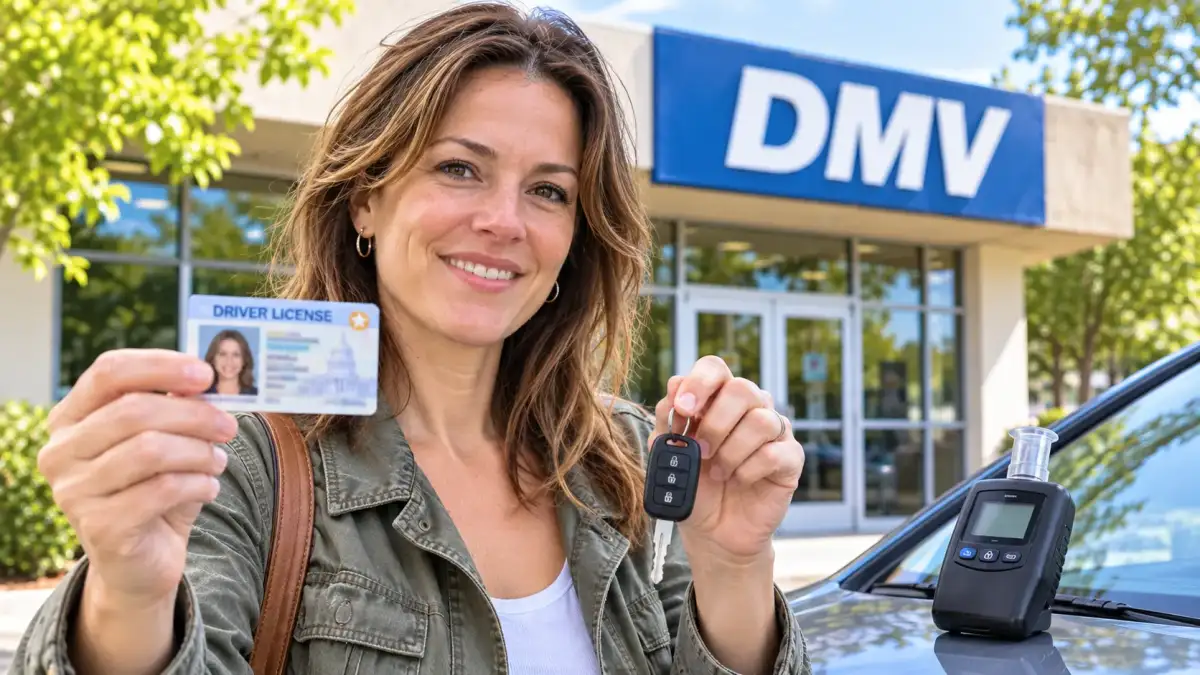
This is the most complex reinstatement scenario on this site, because it usually isn't one process — it's several, layered on top of each other. Everything from earlier in this hub applies here, plus DUI-specific requirements most standard suspensions don't have.
What's Usually Required, On Top of a Standard Reinstatement
Beyond the standard steps covered in how to reinstate a suspended license, a DUI or DWI reinstatement commonly adds:
- An ignition interlock device (IID), often for a set minimum period
- A drug or alcohol education or treatment program, sometimes regardless of how long ago the offense happened
- SR-22 or FR-44 proof of financial responsibility — see required documents for reinstatement for the difference between the two
- In some states, a formal hearing rather than a paperwork-only process — which, per how long reinstatement takes, can add months rather than weeks
The Ignition Interlock Early-Reinstatement Option
This is genuinely useful and not widely known: several states let you get back on the road sooner than your standard suspension would allow, specifically by agreeing to drive with an IID. How this works varies by state:
- Utah: petition a hearing officer, install the device, attend a hearing, and pay the reinstatement fee — after which you're an IID-restricted driver for 120 days on a first offense, or 2 years on a second.
- Colorado: as of a 2023 rule change, a Per Se or DUI conviction now qualifies for IID-based reinstatement starting day one of the revocation, with no separate waiting period. A test refusal still requires serving two months first.
- South Carolina: as of May 2024, an IID is no longer optional for DUI, DUAC, or felony DUI suspensions — it's required to clear them, a tightening from the state's earlier rules.
- California: its statewide IID pilot program lets you skip the waiting period entirely and drive on an IID-restricted license right away — but you still have to complete a DUI program and provide an SR-22 before getting your full, unrestricted privileges back. The IID route changes the waiting mechanics, not the underlying requirements.
A Real Trap: Removing the IID Too Early
Utah's rule is a clear, documented example of a consequence worth knowing about wherever you are: if you remove the ignition interlock device before your restricted period actually ends, your license goes back to suspended for whatever time remained, you owe another reinstatement fee, and you lose the ability to petition for early reinstatement again. Treat the restriction period as a hard deadline, not a suggestion — several states penalize early removal specifically because it defeats the purpose of the program.
Recent Rule Changes Worth Knowing
This area of law moves. Colorado's 2023 change and South Carolina's 2024 change both meaningfully altered the DUI reinstatement path in those states within the last couple of years. If you're working from an older article, a forum post, or something a friend told you, treat it as a starting point rather than current fact — confirm directly with your state's motor vehicle agency before assuming a rule still applies.
Remember: This May Be Two Separate Processes
As covered in administrative vs. court-ordered suspensions, a DUI arrest can trigger an immediate administrative suspension independent of whatever the criminal court eventually decides. If both apply to your situation, you may need to resolve each one — potentially with separate paperwork, separate hearings, and separate fees — rather than assuming one reinstatement covers both.
Frequently Asked Questions
Does completing a DUI program shorten my suspension?
Not usually on its own — it's typically a requirement you have to complete before reinstatement is possible, rather than something that reduces the suspension length itself. The IID early-reinstatement option is the more common way to shorten your actual time without driving privileges.
Do I need a lawyer for this specifically?
Not necessarily for the reinstatement paperwork itself, but given how much is layered together — administrative and court processes, IID rules, SR-22 requirements, possible hearings — this is one of the situations on this site where talking to an attorney is genuinely worth considering, especially if anything about your case is contested.
Will a restricted IID license let me drive anywhere, or just specific places?
This varies by state — some IID-restricted licenses allow general driving with the device installed, others limit where you can drive similarly to a hardship license. See hardship and occupational licenses for how restricted driving privileges typically work.
Does a second DUI reset the whole process, or build on the first?
It generally builds on it, and usually much more severely — longer IID periods, longer waiting periods, and stricter eligibility, as Utah's 120-day-versus-2-year example shows clearly.
Sources & Methodology
Compiled directly from official state motor vehicle agency DUI reinstatement programs:
- Utah Driver License Division — DUI Early Reinstatement
- Colorado DMV — Early Reinstatement (Interlock)
- South Carolina DMV — License Reinstatement
- California DMV — Statewide Ignition Interlock Device Pilot Program
DUI and DWI reinstatement rules are among the most state-specific and frequently updated topics covered on this site. The four states above illustrate real, current program mechanics, not a complete 50-state survey. This guide reflects information current as of publication — given how often these rules change and how much is at stake, confirm your specific state's current requirements directly, and consider speaking with a licensed attorney if your situation involves a contested case.
This article is for general educational purposes only and isn't legal advice. DUI and DWI reinstatement involves serious legal consequences — consult a licensed attorney in your state for guidance on your specific situation.
Next step: Whether you're on an IID restriction or waiting out a standard suspension, a restricted license for essential driving may be an option in the meantime. See Hardship & Occupational Licenses: Eligibility and How to Apply.