This cause of suspension has a specific risk the others in this hub don't: you can be legally suspended before you even know it happened. Here's how it actually works, and the mistake that resets the whole process for a lot of people.
How States Actually Catch This
You don't necessarily need to get pulled over for this to catch up with you. Roughly half of U.S. states now run some form of electronic insurance verification, where your insurance company reports your policy status directly to the motor vehicle agency on an ongoing basis, rather than the state relying on a traffic stop to discover a lapse. When a policy is cancelled or lapses, insurers commonly file a specific cancellation notice — often called an SR-26 — that flags the change to the state automatically.
You May Be Suspended Before You Know It
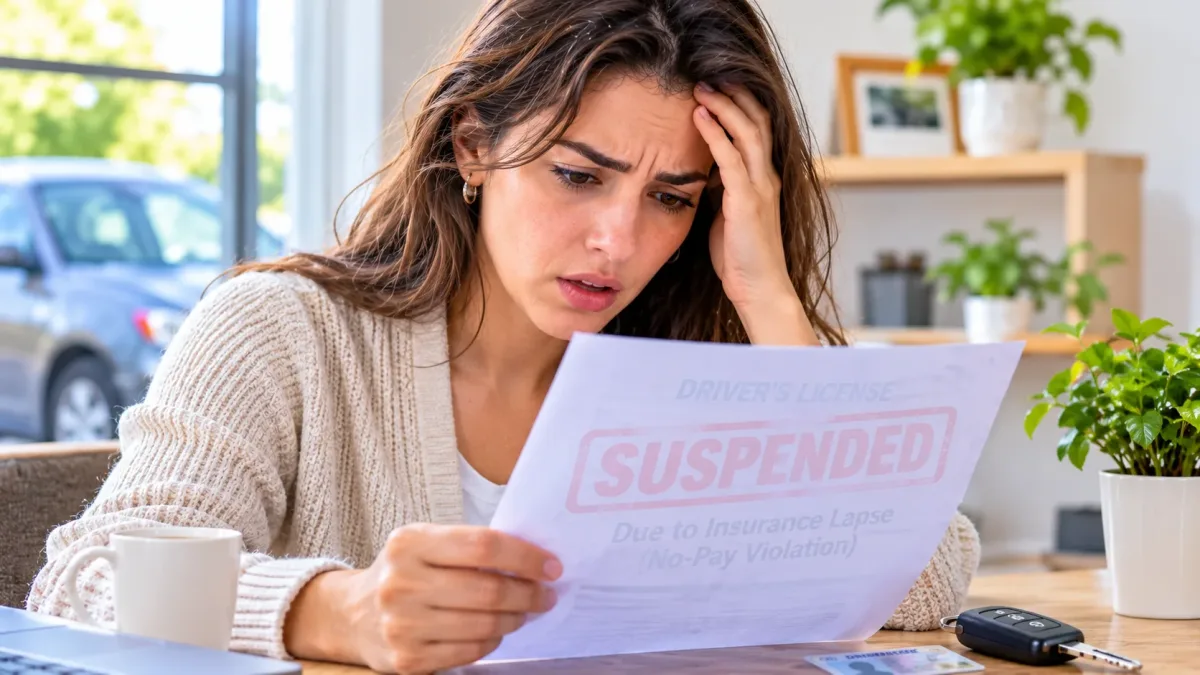
This is the part worth taking seriously: in many states, this suspension is automatic, without a hearing and sometimes without advance warning. The effective date is often calculated from when the coverage actually lapsed, not from when you receive the notice by mail — meaning it's possible to be driving on a technically suspended license during the gap before the letter arrives. If you've had any lapse in coverage recently, it's worth confirming your license status directly rather than assuming everything's fine because you haven't received anything yet — see how to check if your license is suspended.
Getting Reinstated: What's Usually Required
The general reinstatement process covered in how to reinstate a suspended license applies here too, with one addition that surprises people: many states require SR-22 proof of financial responsibility for a period after an insurance-lapse suspension, even when the original cause had nothing to do with a DUI. Don't assume SR-22 is only for alcohol-related cases — a straightforward coverage lapse can trigger the same requirement in many states.
The Trap: Letting the SR-22 Itself Lapse
This is the mistake that costs people the most time. If your SR-22-backed policy lapses again during the required filing period — even briefly — most states don't just extend your existing requirement, they restart the entire filing period from the beginning. Combined with how automatically these lapses get reported, a single missed payment during your SR-22 period can mean starting over rather than picking up where you left off. Setting up automatic payments for a policy with an active SR-22 filing is one of the more genuinely useful things you can do here.
A Real Example of State Variation: Texas's SR-22 Duration
Most general guidance cites "about three years" for how long an SR-22 has to stay in place, and that's a reasonable average — but it isn't universal. Texas's own Department of Public Safety states the requirement directly: an SR-22 there must be maintained for two years from the date of your most recent conviction or judgment, not three. If a source doesn't cite your specific state, treat "three years" as a general estimate rather than your actual requirement.
If You Don't Own a Vehicle
You can still be required to file an SR-22 even without owning a car — a non-owner policy exists specifically to satisfy this requirement while covering you as a driver rather than insuring a specific vehicle. If reinstatement requires SR-22 proof and you don't currently own a vehicle, ask specifically about this option rather than assuming you need to own a car first.
Frequently Asked Questions
If I get new insurance right away, does my license reinstate automatically?
Not automatically — your new insurer typically has to electronically file proof (and an SR-22, if required) with the state, and you may still owe a reinstatement fee, before your license is actually valid again.
Can my vehicle registration be suspended too, not just my license?
In many states, yes — an insurance lapse can affect both separately, so resolving your license doesn't automatically clear a related registration suspension.
Does this affect my insurance rates going forward?
Typically, yes — a lapse of more than about 30 days is generally associated with a larger rate increase than a shorter gap, and the SR-22 filing itself signals higher risk to insurers during the required period.
What if I genuinely didn't know my policy had lapsed?
Unfortunately, most systems don't require the state to prove you knew — the electronic notification and effective date typically apply regardless of whether you were aware. This is exactly why confirming your status directly, rather than assuming, matters here.
Sources & Methodology
Compiled from official state sources where available and cross-checked secondary sources:
Electronic verification prevalence, exact suspension timelines, and SR-22 duration requirements vary by state and by insurance-industry reporting rather than a single centralized source for every state; treat specific day-counts and percentages cited here as general patterns rather than guaranteed figures for your state. This guide reflects information current as of publication — confirm your specific state's process with its motor vehicle agency and your insurance provider.
This article is for general educational purposes only and isn't legal or financial advice. For guidance on your specific situation, contact your state's motor vehicle agency or your insurance provider directly.
Next step: That covers every numbered topic in this hub. See License Suspension & Reinstatement: The Complete Guide for the full picture tied together in one place.