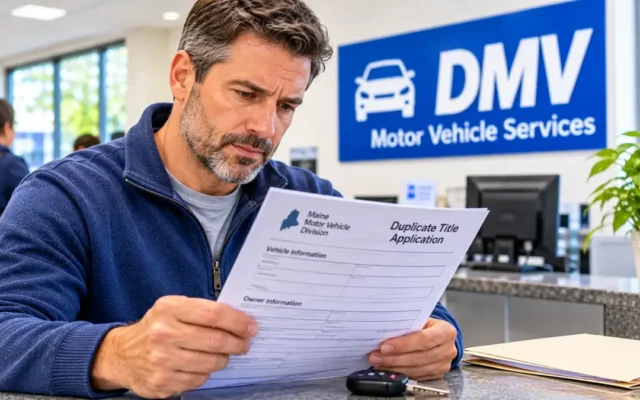
This covers authorizing someone else to handle a vehicle title or registration transaction on your behalf — not getting a license issued in your name, which almost always requires your own personal appearance regardless of any POA.
General vs. Limited: Two Different Kinds
A general power of attorney authorizes an agent to handle a broad range of matters — sometimes phrased as "any and all transactions" — for an indefinite period. A limited (or specific) power of attorney authorizes only the exact transactions it names, for a defined purpose or time period. Some states, New York among them, will treat a POA that doesn't specify particular transactions as a general one by default — so if you only want your agent handling one specific vehicle transaction, say so explicitly rather than leaving it open-ended.
Use Your State's Own DMV-Specific Form
Many states maintain their own dedicated vehicle power of attorney form, separate from a general estate-planning or financial POA you might already have — California's REG-260, Rhode Island's Vehicle Owner's Limited Power of Attorney, Massachusetts's TTLREG109, and Colorado's DR-2175 are all examples. A general POA drafted for other purposes may or may not satisfy your state's DMV requirements, so it's worth checking whether a state-specific form exists before assuming an existing document will work.
The Odometer Disclosure Wrinkle
This is a detail that trips people up. Federal law requires an odometer disclosure statement for most vehicle sales, and several states — Rhode Island, Texas, Florida, and Colorado among them — specifically require a different, separate "secure" power of attorney form when the agent will be the one completing that odometer disclosure. There's also an important restriction built into this: the same agent generally can't sign the odometer disclosure as both the buyer and the seller in the same transaction — a conflict-of-interest safeguard. If your POA involves a vehicle sale specifically, don't assume your general vehicle POA form covers this piece.
You May Not Even Need One
Before drafting anything, check whether your situation actually requires it. New York's DMV notes that you don't need a POA to register a vehicle on someone else's behalf if you can simply show that person's proof of identity and date of birth at the DMV office — a POA is specifically for when you need to sign documents on their behalf, not merely show up with their information.
It Usually Doesn't Cross State Lines
Don't assume a POA valid in one state automatically works in another for the same vehicle. New York's DMV is explicit that an out-of-state secure power of attorney can't be used to transfer a New York title. If your transaction spans more than one state, confirm the specific POA requirements of the state where you're actually completing the transaction.
Requirements to Know
- The agent generally must be at least 18 years old.
- Some states build in an automatic expiration — Rhode Island's form, for example, expires once the transaction processes or 30 days after signing, whichever comes first.
- Signature rules can be specific: Massachusetts accepts e-signatures on its POA form, except when a witness signature is involved, in which case every signature on the document must be handwritten.
- The agent typically needs to bring the physical POA document to the DMV when acting on it, not just reference that one exists.
Frequently Asked Questions
Can I use a power of attorney to get someone a driver's license?
DMV power of attorney forms are built around vehicle title and registration transactions specifically. License issuance generally requires the applicant's own personal appearance for identity verification and photo capture, regardless of any POA in place.
Does the agent need to be a family member?
No — the agent can be anyone the principal trusts to act on their behalf, including a friend, business associate, or professional handling the matter, not necessarily a relative.
Can the agent sell my car using a vehicle POA?
Depends on what the specific POA document authorizes — if it's limited to registration, it may not extend to a sale. Make sure the document explicitly covers a sale if that's what you need your agent to do.
Do I need to notarize a DMV power of attorney?
This varies by state and by which specific form you're using — some require notarization, others accept a properly witnessed signature instead. Check your specific state's form instructions.
Sources & Methodology
Compiled from official state motor vehicle agency power of attorney policies and forms:
- New York DMV — Power of Attorney for Vehicle Transactions
- Massachusetts RMV — Power of Attorney for Title & Registration Policy
- Rhode Island DMV — Vehicle Owner's Limited Power of Attorney
POA requirements, available forms, and specific rules around odometer disclosure vary by state and can change. This guide reflects information current as of publication — confirm your own state's specific requirements and forms with its motor vehicle agency.
This article is for general educational purposes only and isn't legal advice. For guidance on your specific situation, contact your state's motor vehicle agency or consult a licensed attorney.
Next step: That covers every numbered topic in this hub. See Essential DMV Procedures & Documents: The Complete Guide for the full picture tied together in one place.